
FLOTATION CHEMICALS
Flotation is a widely used ore beneficiation method preferred in many mining operations for separating precious metals and obtaining concentrates. Various chemicals are used in flotation beneficiation as collectors, frothers, and regulators.
List of main chemicals used:
- Potassium Ethyl Xanthate – PEX (KEX)
- Potassium Amyl Xanthate – PAX (JAX)
- Sodium Sulfide – Arsenic
- Sodium Silicate
- Sodium Bichromate
- Methyl Isobutyl Carbinol – MIBC
- Zinc Sulfate
- Copper Sulfate
- Sodium Isopropyl Xanthate – SIPX
- Sodium Isobutyl Xanthate – SIBX
- Sodium Sulfidate
- 2-Ethyl Hexanol
- Butyl Glycol
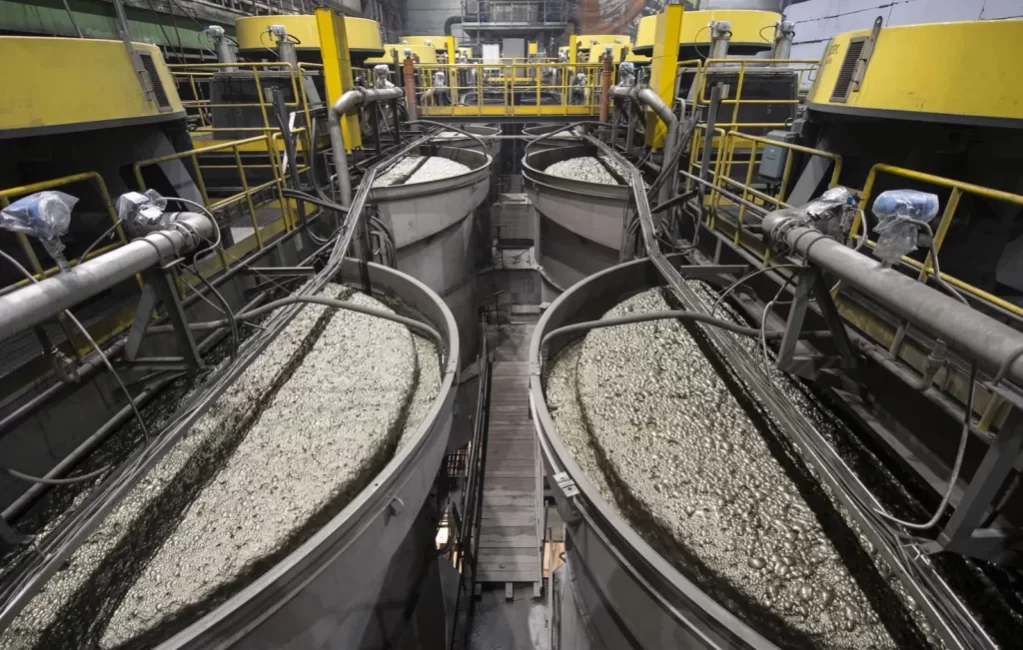
1- Collectors, these are chemicals that increase the hydrophobicity of certain minerals, allowing them to adhere to air bubbles during foaming.
- Common Collectors:
- Xanthates (e.g., potassium ethyl xanthate (PEX), potassium isobutyl xanthate (PIBX), and potassium amyl xanthate (PAX)): Commonly used in sulfide minerals, such as pyrite or arsenopyrite, often accompanying gold.
- Dithiophosphates: Preferred for improving the buoyancy of gold and sulfide minerals. They are more selective and have less foaming ability compared to xanthate.
- Thionocarbamates are used in specific situations for the selectivity of gold and associated sulfides.
- Fatty acids and oleic acids: Sometimes used for flotation of oxide gold ores.
- Application: Collectors find that gold and associated minerals adhere strongly to air bubbles, making it easier to separate them from gangue (non-gold) material.
2- Frothing agents
Frothers stabilize air bubbles in the flotation cell, ensuring better adhesion of hydrophobic particles. They control bubble size and provide foam stability for an efficient flotation process.
- Common Foaming Agents
- Methyl isobutyl alcohol (MIBC): One of the most commonly used frothers for a wide range of minerals, including gold.
- Pine oil: A naturally derived foaming agent.
- Polypropylene glycol: Used to produce fine, stable bubbles.
- Alcohol and Polyglycol Based Frothers: Provide foam stability and are adaptable to different flotation conditions.
- Application: Frothers ensure uniform bubble formation and stability, which improves the recovery efficiency of fine gold particles.
3- Pressure Reducing Devices
Pressure-reducing agents prevent certain minerals from flotation, which allows for the selective recovery of gold and associated precious minerals.
- Common Pressure Relievers:
- Sodium cyanide (NaCN): Used to suppress pyrite and other sulfide minerals, thereby increasing the selectivity of gold.
- Sodium Silicate (Water Glass): Used as a dispersant to prevent the buoyancy of gangue minerals.
- Starch and Guar Gum: Effective as organic suppressants for silicate minerals in some gold flotation circuits.
- Application: Suppressors enhance the separation of gold from gang minerals by reducing the buoyancy of unwanted impurities.
4- Activators
Activating agents are chemicals that increase the buoyancy of minerals that would otherwise be difficult to float.
- Common Activators:
- Copper sulfate (CuSO₄) is frequently used to activate sulfide minerals, such as sphalerite or arsenopyrite, which are minerals that accompany gold.
- Lead nitrate (Pb(NO₃)₂) is used in gold flotation to reduce cyanide consumption and improve the gold recovery process by activating minerals.
- Application: Activators alter the surface chemistry of minerals, making them more suitable for collector binding.
5. pH Regulators
pH modifiers regulate the alkalinity or acidity of the flotation sludge, which in turn affects the efficiency of other reagents and the separation process.
- Common pH Modifiers:
- Lime (CaO): Used to increase the pH of the pulp, creating the preferred alkaline conditions for most sulfide gold ores.
- Sulfuric acid (H₂SO₄) or hydrochloric acid (HCl): In rare cases, it is used to lower the pH for certain gold flotation processes.
- Sodium hydroxide (NaOH): A common alkali changer.
- Application: Maintaining the correct pH environment is critical for the activation and efficiency of the collectors.
6. Sulfur Mineral Suppressants in Resistant Gold Groins
In resistant gold spoons containing sulfur minerals (e.g., pyrite or arsenopyrite), additional chemicals may be required to suppress unwanted minerals during flotation.
- Examples of reagents:
- Potassium permanganate (oxidizing agent)
- Sodium hydrosulfite (reducing agent)
- Carbon suppressors for silicates
- Applications in Different Groin Areas:
- In freely grindable gold alloys: Since gold is generally associated with sulfides, xanthates and frothers are primarily used.
- Refractory minerals: Require specialized reagents, including pressure reducers, pH regulators, and occasional bio-oxidation pretreatments.
- Oxide Minerals: Due to the presence of non-sulfurous minerals, fatty acids or anionic collectors are used.
OUR MINING FLOTATION CHEMICAL PRODUCTS
Potassium amyl xanthate It is an organosulfur compound represented by the formula CH3CH2OCS2K. PAX It is a light yellow chemical used in the mining industry to separate ores. Related to sodium ethyl xanthate on the contrary, potassium salts are found in the form of anhydrous salts.
POTASSIUM AMYL XANTHATE – PAX (JAX)
It is a highly potent, non-selective collector from the xanthate group, commonly used in the flotation of sulfide ores.
It is generally used as a scraper after more selective collectors. It can be pale yellow or grayish-white in color; it is presented in powder or pellet form. It has a pungent odor. It is easily soluble in water. It readily decomposes in acid and heat.
QUALITY CERTIFICATE:
Potassium ethyl xanthate, CH₂OCS₂K, is an organosulfur compound with the chemical formula CH₂OCS₂K. It is a pale yellow powder used in the mining industry for the separation of ores. Unlike its related sodium ethyl xanthate, the potassium salt exists as an anhydrous salt.
POTASSIUM ETHYL XANTHATE – PEX (KEX)
It is a low-cost, highly selective but not very potent collector from the xanthate group, used in the flotation of sulfide ores.
It is used extensively in the flotation of Cu, Ni, and Ag ores. It is particularly preferred in situations where maximum selectivity is important.
APPLICATIONS:
QUALITY CERTIFICATE:
Methyl-2-pentanol, or methyl isobutyl carbinol, is an organic chemical compound used primarily as a frother in mineral flotation.
METHYL ISOBUTYL CARBINOL – MIBC
Renksiz, stabil, hafif kokulu alifatik bir alkoldür. Güçlü oksidantlarla reaksiyona girer. Mineral flotasyonunda en yaygın kullanılan, kırılgan köpük oluşturan, zayıf bir köpürtücüdür (frother). Nötral bir köpürtücü olduğundan hem asidik hem de bazik pülpte çalışır. Özellikle, ince partikül boyutlu kurşun-çinko sülfitlerinin işlendiği yüksek hacimli işletmelerde kullanıma uygundur.
APPLICATIONS:
KALİTE BELGESİ:
Copper(II) sulfate, also called cupric sulfate or copper sulfate, is a chemical compound with the chemical formula CuSO₄. A number of different compounds exist depending on the hydration degree of this salt.
Formula: CuSO44
IUPAC number: Copper(II) sulfate
Molar mass: 159.609 g/mol
Density: 3.6 g/cm³
Melting point: 110 °C
The substance it dissolves in: Water
Molecular formula: CuSO4
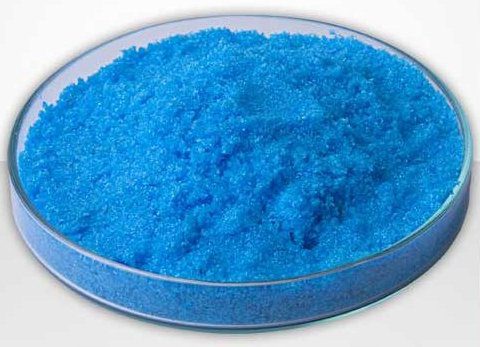
Copper sulfate salt, also known as bluestone, is a blue and odorless chemical compound. It is completely soluble in water.
APPLICATIONS:
Zinc sulfate is an inorganic compound. It is used as a dietary supplement to treat zinc deficiency and prevent the condition in people at high risk. Side effects of excessive supplementation may include abdominal pain, vomiting, headache, and fatigue.
Formula: ZnSO₄
Molar mass: 161.47 g/mol
Density: 3.54 g/cm³
Boiling point: 740 °C
Classification: Sulfate, Inorganic compound
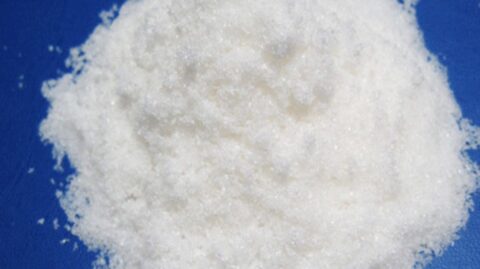
Zinc sulfate is a colorless/transparent, crystalline chemical. It is quite soluble in water. The heptahydrate form is commonly used.
It is used in the mining industry for the flotation of base metal ores. It can be used alone or in combination with cyanide.
APPLICATIONS: